
Plant Math – Multiplying Lilacs Through Suckers
On this sunny morn, we have some lilac suckers that need dividing.
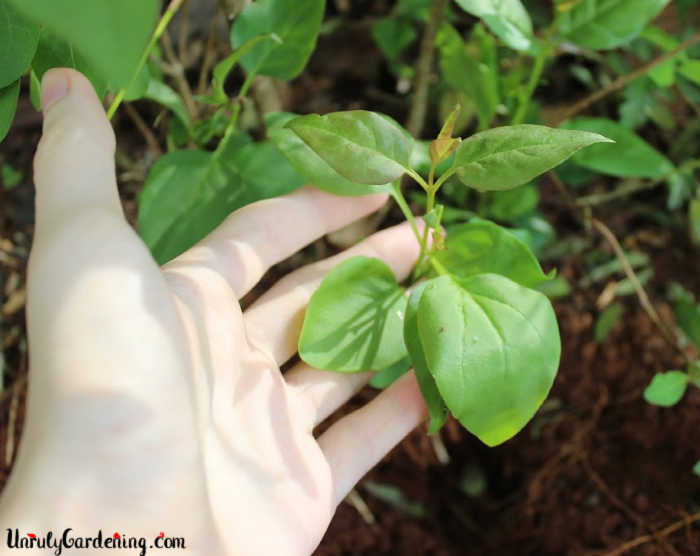
Lilacs have the glorious ability of multiplication through taking a root and deciding to grow a baby on it. Normally, that baby would be stuck right there, in the shade of the parent plant, never to journey off on its own, experience new dirt, or feel the warmth of full sunshine on its little leaves. Alas!
Let’s change that, shall we?
You will need
- A shovel
- Sharp pair of pruning shears
- A bucket or some 1 gallon pots (if you don’t plan to plant them right away)

Start by picking out which sucker you want to split away, clearing the dirt around it. It’ll basically look like a little shoot sticking out of the ground with leaves on it.

Now start digging! Remove the dirt all the way around until you find the parent root (big) and the baby roots, which belong to the sucker (small). If the sucker doesn’t have visible roots, rebury it and try another.

Cut right under the baby roots to free the sucker from its earthen prison. You are now in possession of a baby lilac!

Collect as many suckers as you want/your shrub has/until your bucket’s full. Now you can do a couple things.
Option A: Go ahead and plant them. Pick out well-draining, sunny spots (areas with ideally 6+ hours of light, though they can also grow fine in partial shade, though they’ll likely have less flowers), dig a hole, plop the sucker down inside, cover roots with soil, and water well. And just like that, you’re done- your lilac sucker has now been planted!
After that, keep an eye on the soil moisture. You want to keep the soil evenly moist (but not soaked!) for the first week, then ease off on the watering once the roots have had a chance to settle in.
Well-established lilacs rarely ever need watering, but first-year baby lilac bushes usually need a good, deep watering every few weeks/month or so, especially through spells of drought.

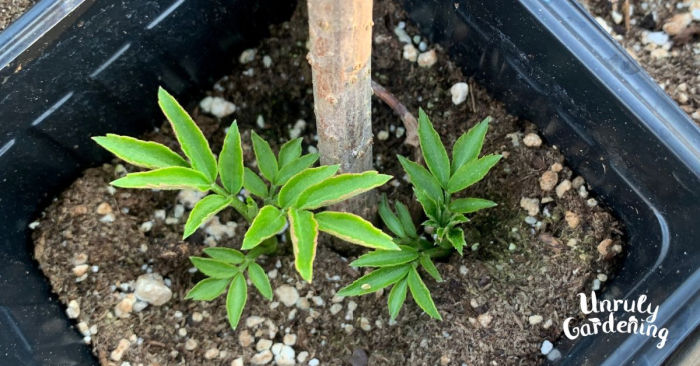
Option B: Not ready to plant just yet? Stick ’em in a pot until you are! Fill a 1 gallon pot (with drainage holes) with a good-quality potting soil or garden soil, planting two suckers to a pot, and water well. They’ll keep until you figure out where you want them.
That’s really all there is to it! Lilac propagation is extremely easy, and the plants themselves are remarkably hardy. Delicate in both appearance and fragrance the flowers might be, but there’s not much out there that’s as tough and resilient as a well-established lilac!


Thank you so much for this info. I have a driveway that is lined with lilac bushes. Original shoot came from my Mom. My daughter lives on the other side of this long driveway and gets to enjoy it as well. I have many shoots as well and want to replant in other areas. I was not sure how to dig them up without harming the shoot.Thank you again for giving me the know how, to do this comfortable. Now I can save them and spread them around without harming them.
Hi Rose, I’m so glad the information was helpful! And how wonderful to have lilacs from your mom, that you and your daughter can also enjoy. I love that!
My original lilac shoots came from my oldest sister’s house and I think of her every time I walk past or sniff our lilacs.