
Spring Greens Lip Balm
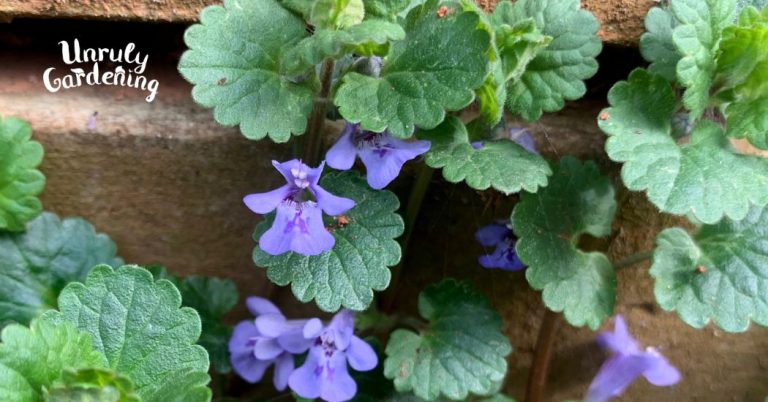
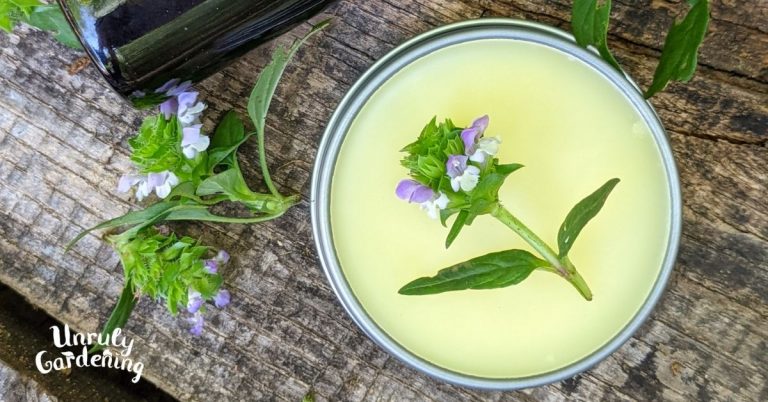
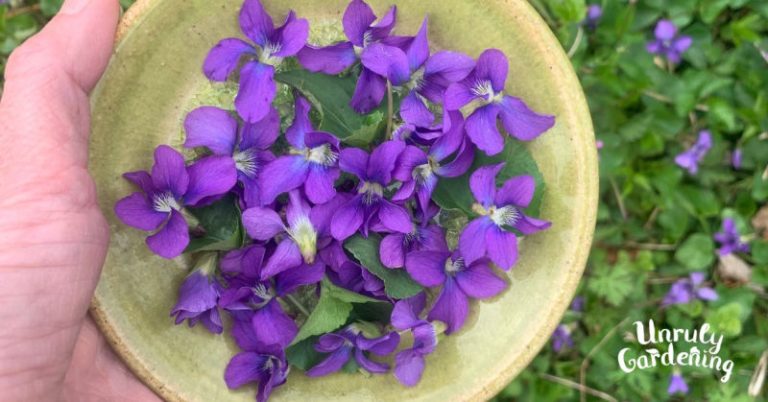
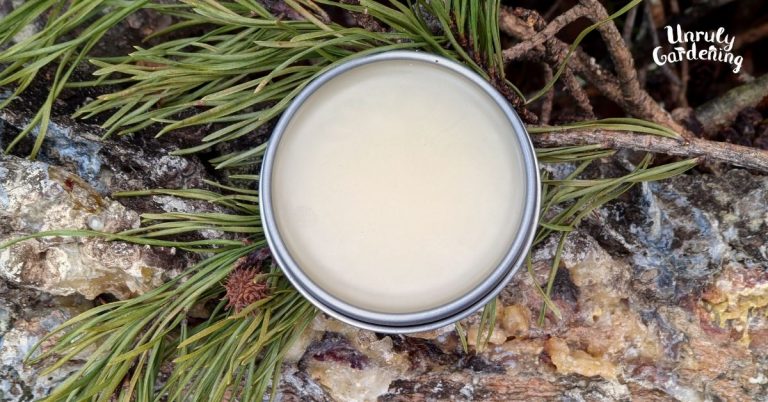
Use some foraged early spring greens to make a lovely little lip balm! Violet leaves, purple deadnettle, and chickweed combine with sweet almond, tamanu, and castor oil to create a soothing balm for chapped lips.

Infused Oil
First, you’ll want to make an infused oil to use in the lip balm.
You will need:
- 1 tbsp dried violet leaves
- 2 tbsp dried purple deadnettle
- 3 tbsp dried chickweed
- 8 oz sweet almond oil
To make the oil, measure all dried plant matter into a heat-safe container such as a mason jar. Gently crumble the plants just slightly with your hands while measuring if they’re in large pieces to make measurements more accurate.
Weigh out and pour the sweet almond oil over top of the dried plant matter. Place your heat-safe container of herbs and oil in a small saucepan of water on top of a stove burner set on low to infuse through heat for 2 hours. Remove infusion from heat, and leave to cool.
If desired, the oil can be used now, but it will be more effective if allowed to infuse for longer. To keep infusing, wait for the oil to completely cool, then cover the top with a lid. Place container in a sunny window and leave it there for another two weeks.
Once two weeks are up, strain the oil free of plant matter with a fine mesh strainer. Discard spent plant matter (you can compost it if you’d like!), and keep the oil. Store infused oil in a lidded container, label it, and keep in a cool and dark place.

Spring Greens Lip Balm
This recipe is designed to make a lip balm that you pour into containers and apply with a finger, not the kind that’s poured into tubes. If you want to modify this recipe for lip balm tubes, try dropping the infused oil amount from 1.50 oz to 1.25 oz.
You will need:
- 1.50 oz infused oil
- .25 oz tamanu oil (this is responsible for the balm’s green color!)
- .25 oz castor oil
- .50 oz beeswax
- .50 oz mango butter
- 5 drops peppermint essential oil
Weigh out the infused oil, tamanu oil, castor oil, beeswax, and mango butter, and place all of it in a heat-safe container such as a mason jar. Place the jar of ingredients in a small saucepan of water on a burner set to medium-low heat to melt the butter and wax. Stirring occasionally will help speed the melting.
Once everything is melted together, remove from heat and add 5 drops of peppermint essential oil. Stir to combine, then pour liquid lip balm mixture into desired containers. Once lip balms have completely cooled, cap and store.
This recipe will make about 6 half-ounce tins or 3 1 oz tins of lip balm.
Do you sell your produts you make?
Hi Michele! No, I do not, but thanks for asking! 🙂
what a wonderful recipe for spring, thank you!
have all growing around the place…eating the leaves of violets are a lovely treat for me. have all ingredients with the exception of the mango butter but believe I can use other butters as substitutes.
so happy I found this article.
Hi Dawn, So happy to hear you like the recipe!
You sure can use other butters instead of mango.
I hope you enjoy all of your wonderful spring plants! 🙂
Hello Jan, I am a big fan of yours! would shea butter be okay?
Hi Holly, Thank you for the kind words! ❤ Yes, shea butter would work great in place of the mango butter!